Overview
E-waste has become a major problem in today's world, as more and more e-waste is being created by the day. With our reliance on technology only growing by the day, and with more and more datacenters being built, this problem will only get worse in its current state. Various important materials are a part of much of our e-waste today, from valuable resources like gold or copper, but also hazardous materials, like lead and mercury. For most however, extracting and properly disposing of these materials is low priority. In fact, a record of 62 million tons of e-waste was produced in 2022, and almost 80% of it was not properly recycled.
The Causes of the E-Waste Crisis
There are many causes for the rapid rises in e-waste amounts in recent times. For starters, the average time consumers keep their devices has steadily gone down to 2 or 3 years. This means that a new device is put into circulation, while the "old" device is either discarded or resold as used. Often, the only reason these upgrades are performed is because phone carriers are offering upgrade deals, while the old device still perfectly functions fine. Many of these devices are capable of lasting 10+ years, meaning this e-waste is often created for almost no reason at all.
The high reliance on technology in todays society also essentially forces everyone to buy multiple devices, even if they don't want to. It's nearly impossible to survive in today's society without a phone for example, and many essential services require access through a website. In addition, many things such as cars, kitchen appliances, and smart home items all use extensive computer parts today. This creates far more avenues for e-waste than just computers, leading to a larger issue.
Last but not least, planned obsolescence is a leading cause of e-waste. The largest example of this is the EoL of Windows 10. Many modern computers fully capable of running Windows 11 are not supported, leading to high amounts of powerful computers being thrown out, and the owners of those computers buying new ones. Some software refuses to run on out of date operating systems, again forcing people to buy new computers. Repairability is also related, as many devices (phones in particular) are hard or impossible to repair, meaning something could get thrown away for a very simple fix.
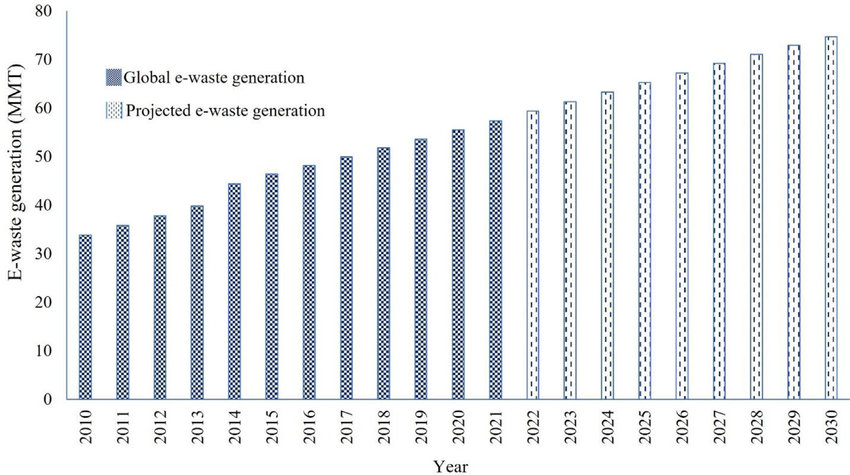
Rise of Cloud Computing
Cloud computing is contributing to a large part of e-waste in the world today. Huge datacenters are spread around the world, filled with servers and other computer hardware, which are used for a large variety of services from streaming video to running hundreds of virtual machines. Datacenters contribute to over 1% of global energy use, and often require large amounts of water for cooling.
The hardware in these datacenters is also one of the major contributers to the amounts of e-waste today. For starters, the hardware in datacenters is often replaced much more often than consumer hardware, due to constant usage wearing down components and the rush to have the newest stuff. In addition, due to the large number of systems in datacenters, large amounts of e-waste is created each time components are cycled out. While larger companies are often better at recycling these systems and components compared to the average consumer, lots of it is often just thrown out or not properly dealt with.
Rise of AI Datacenters/Hardware
The current rise of AI datacenters is a huge problem for future e-waste management. While the specific hardware is currently in use, when the AI bubble eventually pops, huge amounts of this hardware will be useless, leading to large quantities of it being thrown out or sold off in bulk. However, lots of the hardware used in AI datacenters is next to useless for the average consumer. Due to the nature of AI computing, much more power is used compared to standard datacenter things, meaning that more cooling and power is needed. Another major concern that has really risen recently is the surge in prices on PC components, due to the many AI companies buying out the whole supply years in advance.