The Environmental Impact of E-Waste
The large amounts of discarded e-waste is currently causing all sorts of issues in our environment, mainly due to the specific materials electronics are typically made of. When the many chemicals inside typical e-waste decompose and combine together, they can cause all sorts of pollution, leading to poisoned wildlife, water supplies, and bad air quality. In fact, over 50 million tons of mercury are put into the atmosphere every year from e-waste, primarily screens and lightbulbs.
Initial Production and Resource Extraction
Modern electronics require a wide variety of resources from around the globe to produce, all of which can be costly to extract and process. Most new devices today are built with non-recycled materials, meaning all the iron, copper, aluminum, gold, lithium, and dozens of other precious metals required must be mined out of the ground. To put the amount of mining needed for these kinds of scales, in order to get enough gold for one wedding ring, about 20 tons of soil and rock need to be excavated. Often, the extraction/refinement processes for these materials has byproducts as well. For example, the production of lithium dries up groundwater reserves, and the production of neodymium creates radioactive wastewater.
These effects could be slightly mitigated by using recycled material from existing e-waste, like some companies have already done. For example, over 70% of the aluminum Apple uses is recycled from e-waste and other resources. Unfortunately, most companies don't really use recycled materials, and instead rely on fresh ones.
The Disposal of E-Waste
Currently, the disposal of e-waste leaves a lot to be desired, with multiple bad practices taking place leading to large amounts of pollution and build-up. In my eyes, the primary issue with e-waste disposal is that many developed countries take the "make it someone else's problem" route, and send e-waste to other, less developed countries. In these situations, the e-waste is never properly dealt with, and is often improperly processed for the rare materials inside. This ends up releasing large amounts of pollution into the centers of developing communities, causing health issues.
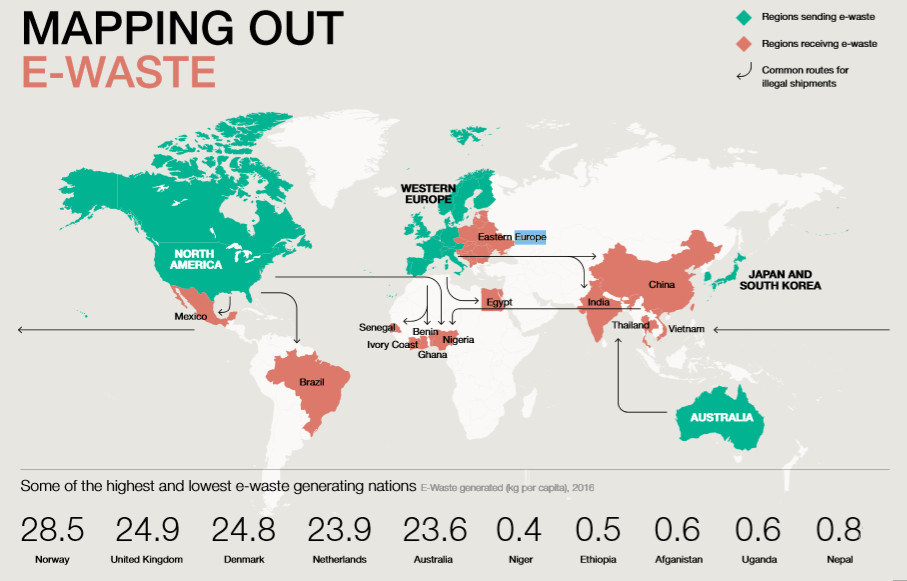
Even when e-waste isn't shipped off to other countries, it's still often improperly processed. Plastic is burned off broken electronics to uncover copper and other metals, releasing toxic funes into the air. Two of the common chemicals it releases, Dioxins and Furans, are known to cause cancer and other major health issues. In order to strip gold off of PCBs, acid is often used and dumped in rivers after used, which causes all sorts of ecological disasters.
Carbon Footprints
The carbon footprint caused by the production of new devices is also an important factor to consider. However, the carbon footprint of electronics typically varies compared to the carbon footprint of something like a vehicle or high-wattage appliance. Where the carbon footprint of a item like a car grows with usage, most of the carbon footprint of a device like a phone or laptop is from its production. This amount typically ranges from 100 to 500kg of carbon, depending on the size of the device. As a result, keeping your devices for longer can massively reduce their carbon footprint, since just keeping a phone for 4 years instead of 2 will essentially halve its carbon footprint.